Subscribe For Free Updates!

We'll not spam mate! We promise.

الجمعة، 7 فبراير 2014

Electric Car

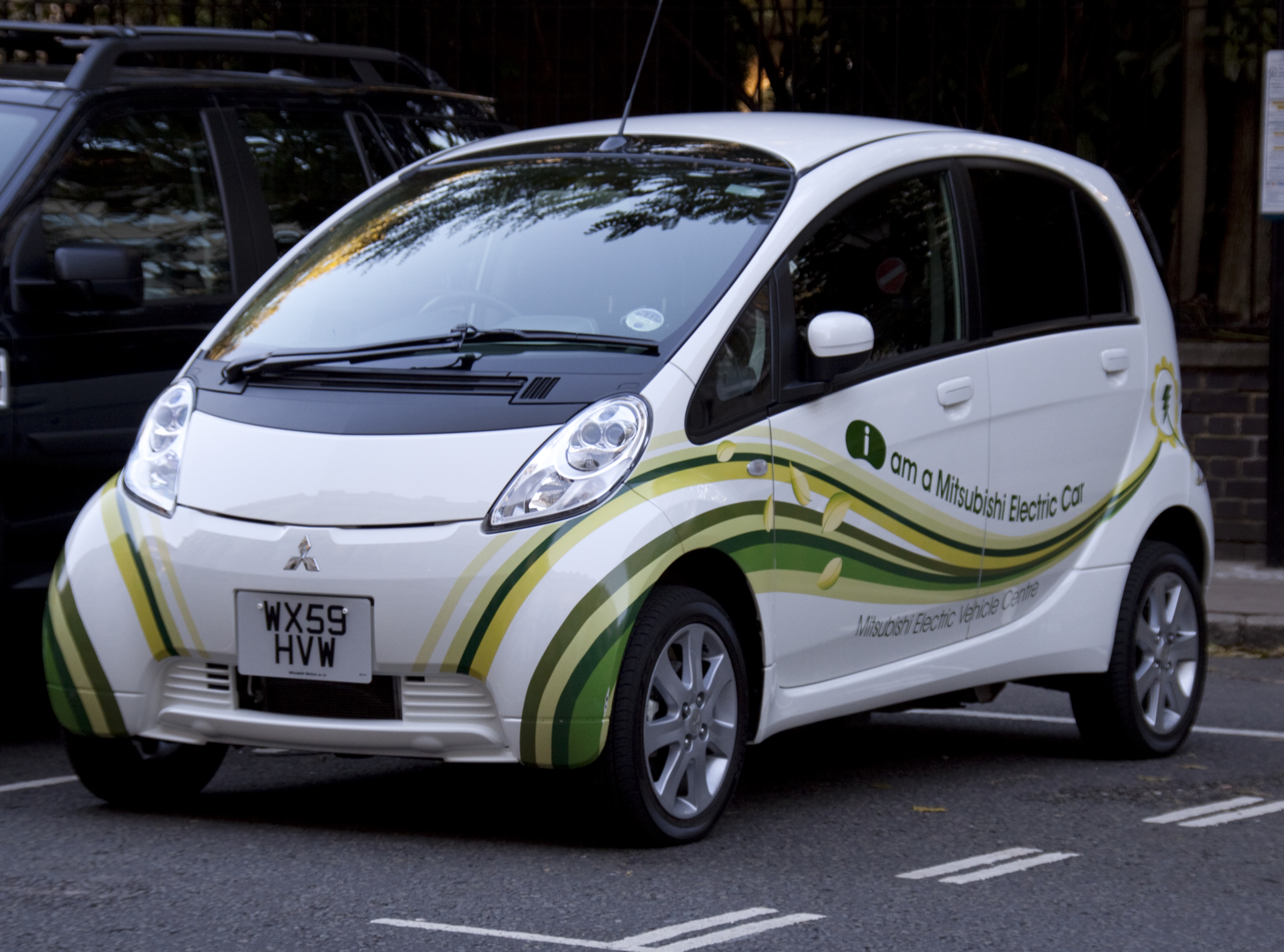
An electric car is an automobile that is propelled by one electric motor or more, using electrical energy stored in batteries or another energy storage device. Electric motors give electric cars instant torque, creating strong and smooth acceleration.
The first electric cars appeared in the 1880s.[1] Electric cars were popular in the late 19th century and early 20th century, until advances in internal combustion engine technology and mass production of cheaper gasoline vehicles led to a decline in the use of electric drive vehicles. The energy crises of the 1970s and 1980s brought a short-lived interest in electric cars; although, those cars did not reach the mass marketing stage, as is the case in the 21st century. Since 2008, a renaissance in electric vehicle manufacturing has occurred due to advances in battery and power management technologies, concerns about increasing oil prices, and the need to reduce greenhouse gas emissions.[2][3] Several national and local governments have established tax credits, subsidies, and other incentives to promote the introduction and adoption in the mass market of new electric vehicles depending on battery size and their all-electric range.
Benefits of electric cars over conventional internal combustion engine automobiles include a significant reduction of local air pollution, as they do not emit tailpipe pollutants,[4] in many cases, a large reduction in total greenhouse gas and other emissions (dependent on the fuel and technology used for electricity generation[2][3]), and less dependence on foreign oil, which in several countries is cause for concern about vulnerability to oil price volatility and supply disruption.[2][5][6] Widespread adoption of electric cars faces several hurdles and limitations, however, including the higher cost of electric vehicles, the lack of recharging infrastructure (other than home charging) and range anxiety, the driver's fear of the batteries running out of energy before reaching their destination due to the limited range of most existing electric cars.[2][3]
As of January 2014, the number of mass production highway-capable all-electric passenger cars and utility vans available in the market is limited to about 25 models, mainly in the United States, Japan, Western European countries and China. Pure electric car sales in 2012 were led by Japan with a 28% market share of global sales, followed by the United States with a 26% share, China with 16%, France with 11%, and Norway with 7%.[7] The world's top selling highway-capable electric car ever is the Nissan Leaf, released in December 2010 and sold in 35 countries, with global sales of 100,000 units by mid January 2014, representing a 45% market share of worldwide pure electric vehicles sold since 2010.[8][9]

Google Glass


Google Glass is a wearable computer with an optical head-mounted display (OHMD) that is being developed by Google in the Project Glass research and development project,[8] with a mission of producing a mass-market ubiquitous computer.[1] Google Glass displays information in a smartphone-like hands-free format,[9] that can communicate with the Internet via natural language voice commands.[10][11]
While the frames do not currently have lenses fitted to them, Google is considering partnerships with sunglass retailers such as Ray-Ban or Warby Parker, and may also open retail stores to allow customers to try on the device.[1] The Explorer Edition cannot be used by people who wear prescription glasses, but Google has confirmed that Glass will eventually work with frames and lenses that match the wearer's prescription; the glasses will be modular and therefore possibly attachable to normal prescription glasses.[12] On 26 Jan 2014, Google announced that they were adding four prescription frame choices for about $225.00 U.S. It is necessary to remove a small screw in order to move the Google Glass from one frame to another.
Glass is being developed by Google X,[13] which has worked on other futuristic technologies such as driverless cars. The project was announced on Google+ by Project Glass lead Babak Parviz, an electrical engineer who has also worked on putting displays into contact lenses; Steve Lee, a product manager and "geolocation specialist"; and Sebastian Thrun, who developed Udacity as well as worked on the autonomous car project.[14] Google has patented the design of Project Glass.[15][16] Thad Starner, an augmented reality expert, is a technical lead/manager on the project.[17]

4K ultra high definition television

4K resolution is a generic term for display devices or content having horizontal resolution on the order of 4,000 pixels.[1] Several 4K resolutions exist in the fields of digital television and digital cinematography. In the movie projection industry, Digital Cinema Initiatives (DCI) is the dominant 4K standard.
The television industry has adopted ultra high definition television (UHDTV) as its 4K standard. As of 2013, some UHDTV models are available to general consumers for under $1000.[2][3] However, due to lack of available content, 4K television has yet to achieve mass market appeal. Using horizontal resolution to characterize the technology marks a switch from the previous generation, high definition television, which categorized media according to vertical resolution (2K,1080i, 720p, 480p, etc.). Note, 2K is recognized


Li-Fi concurrent WIFI

Li-Fi, or light fidelity, refers to 5G[1] visible light communication systems using light from light-emitting diodes (LEDs) as a medium to deliver networked, mobile, high-speed communication in a similar manner as Wi-Fi and Optical fiber[2] Li-Fi could lead to the Internet of Things, which is everything electronic being connected to the internet, with the LED lights on the electronics being used as internet access points.[3] The Li-Fi market is projected to have a compound annual growth rate of 82% from 2013 to 2018 and to be worth over $6 billion per year by 2018.[4]
Visible light communications (VLC) signals work by switching bulbs on and off within nanoseconds,[5] which is too quickly to be noticed by the human eye. Although Li-Fi bulbs would have to be kept on to transmit data, the bulbs could be dimmed to the point that they were not visible to humans and yet still functional.[6] The light waves cannot penetrate walls which makes a much shorter range, though more secure from hacking, relative to Wi-Fi.[7][8] Direct line of sight isn't necessary for Li-Fi to transmit signal and light reflected off of the walls can achieve 70 Mbps.[9]
Li-Fi has the advantage of being able to be used in electromagnetic sensitive areas such as in aircraft cabins, hospitals and nuclear power plants[citation needed] without causing electromagnetic interference.[7][8] Both Wi-Fi and Li-Fi transmit data over the electromagnetic spectrum, but whereas Wi-Fi utilises radio waves, Li-Fi uses visible light. While the US Federal Communications Commission has warned of a potential spectrum crisis because Wi-Fi is close to full capacity, Li-Fi has almost no limitations on capacity.[10] The visible light spectrum is 10,000 times larger than the entire radio frequency spectrum.[11] Researchers have reached data rates of over 10 Gbps, which is more than 250 times faster than superfast broadband.[12][13] Li-Fi is expected to be ten times cheaper and more environmentally friendly than Wi-Fi.[6] Short range, low reliability and high installation costs are the potential downsides